
Power Boost: British Columbia’s Role in Canada’s Energy Market Diversity
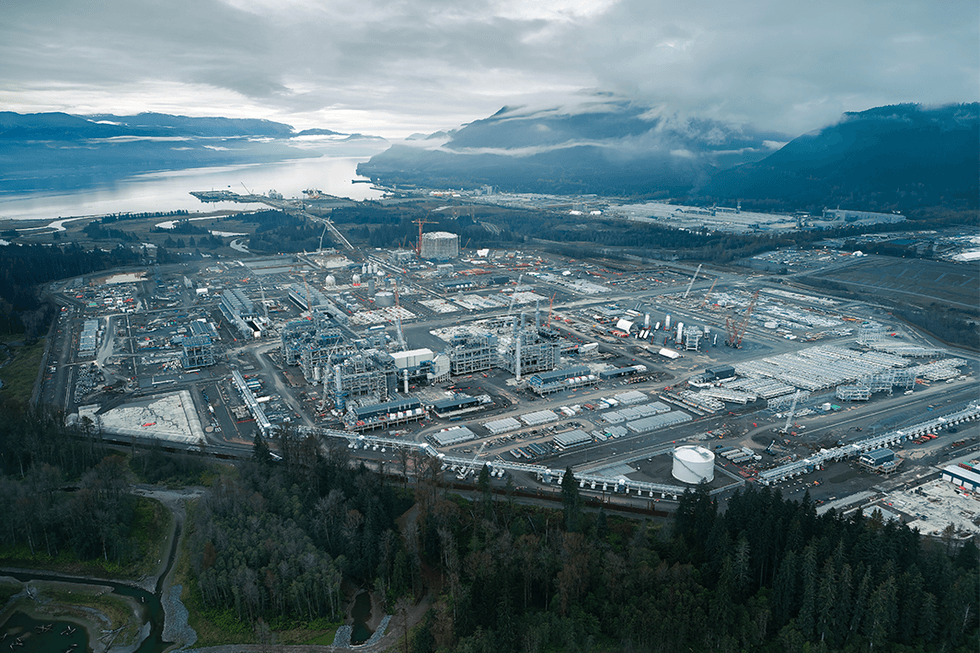
British Columbia is an emerging hub in Canada’s drive for energy market diversity and secure supply.
The federal government cited British Columbia as “a natural partner” in lifting its gas exports to markets outside the US. Its strengths, from its abundant energy resources to being the only province with a direct Pacific Ocean coastline, can aid in the goal of reaching approximately 55 percent more non-US exports by the early to mid-2030s. It is home to the western half of the Montney, one of North America’s most productive gas basins. LNG Canada, the country’s first large-scale liquefied natural gas (LNG) export terminal, can also be found in British Columbia.
Coelacanth Energy (TSXV:CEI) controls over 150 contiguous sections in the Two Rivers region of northeastern British Columbia, positioning it as a capable contributor to securing Canada’s energy future.
Why energy market diversity is now a priority
Natural Resources Canada reported that less than 0.01 percent of Canadian natural gas exports went to markets outside the US in 2024.
Fraser Institute commentary states that Canada is seeking to diversify its energy markets, and further develop its infrastructure to connect Canada’s energy to global markets. A simplified regulatory system would also attract larger domestic and foreign capital.
Much of the work now is seen in British Columbia. Its direct access to the Pacific Ocean provides new routes to overseas buyers. Production in the province’s Montney has also been seeing gains given technology advancements, coupled with its growing pipeline and operating LNG terminals.
LNG demand is another factor. The International Energy Agency (IEA) places global demand growth at roughly 9 percent and supply expansion by around 250 billion cubic metres by 2030. Recent supply shocks, such as the 96 percent drop in Qatar’s exports, showed the market’s small flexibility and pushed importers to diversify.
Global demand for lower-carbon energy is also shaping where energy is going. IEA found that natural gas resulted in 50 percent fewer emissions than coal per unit of electricity generated. The agency specified that LNG exported to China from Canada would have lower emissions than pipeline gas, making a case for Asian buyers looking to move away from coal.
British Columbia as a Canadian gas engine
British Columbia is Canada’s second-largest gas producer, having an output of roughly 7 billion cubic feet per day (Bcf/d) in 2024. Its direct access to the Pacific Ocean plays a huge part, with recent analysis noting that shipping times from Western Canada to Asia are 50 percent shorter compared to those from the US Gulf Coast. Asia, together with the Middle East, largely accounts for growing LNG demand.
The Montney Formation straddles northeastern British Columbia and Northwestern Alberta. The Canada Energy Regulator says…
Read More: Power Boost: British Columbia’s Role in Canada’s Energy Market Diversity