
Oil Prices Near US$120 as Global Supply Fears Grow
Oil markets staged another dramatic rally over the past 24 hours (March 18–19), as escalating geopolitical tensions in the Middle East sent both benchmark crude prices sharply higher before pulling back on profit taking and policy speculation.
Brent crude surged to an intraday high near US$119 per barrel on Thursday (March 19), before easing to roughly the US$113–US$114 range, while US West Texas Intermediate (WTI) briefly touched US$100 and later traded closer to US$96–US$97.
These gains build on momentum from the previous session, when Brent settled around US$107 and extended higher in after-hours trading following fresh attacks on energy infrastructure.
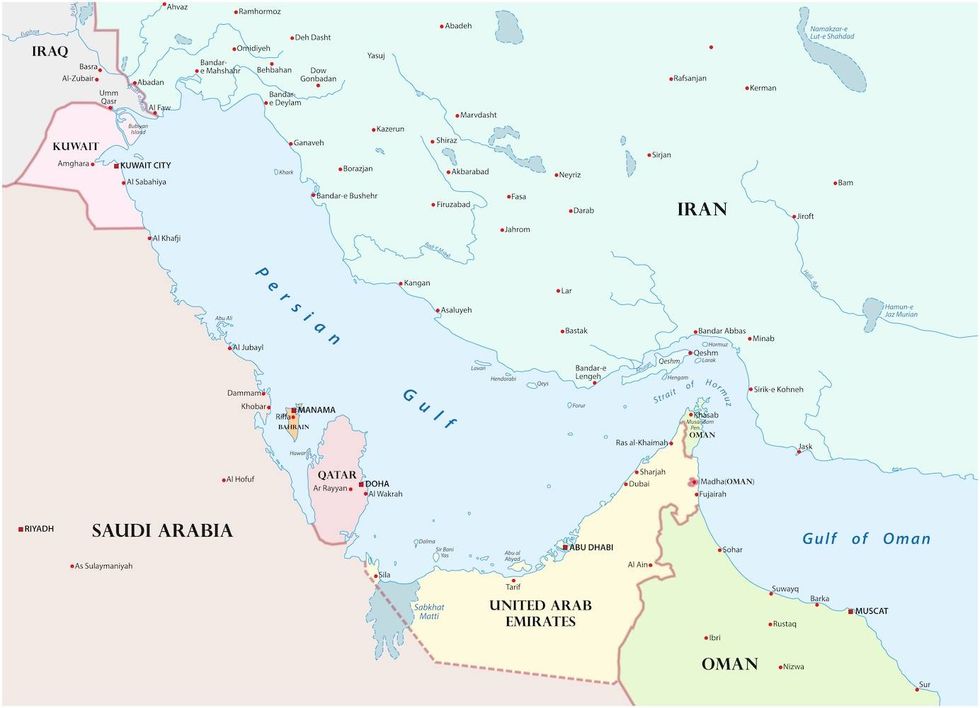
Map highlighting countries around the Persian Gulf, including Iran, Qatar, Saudi Arabia, and others.
lesniewski / Adobe Stock
The primary catalyst behind the latest spike has been a sharp escalation in the regional conflict, including Iranian strikes on key oil and gas facilities across the Persian Gulf and mounting damage to critical export infrastructure. The situation has been compounded by an effective shutdown of tanker traffic through the Strait of Hormuz, a chokepoint that typically handles roughly 20 percent of global oil flows.
Market reaction has been swift, with traders rapidly pricing in a growing risk of prolonged supply disruption.
The widening Brent-WTI spread (now at its largest in over a decade) underscores the global nature of the supply shock and tightening availability of seaborne crude.
Despite the rally, prices have shown intraday volatility as markets weigh potential policy responses. Reports that G7 nations are considering a coordinated release of up to 300–400 million barrels from strategic reserves helped cap gains, although analysts question the effectiveness of such measures.
As some market observers note, even a large release would likely offset only a fraction of the estimated multi-million-barrel-per-day supply shortfall emerging from the region.
Analysts are increasingly warning that the current price action reflects more than a short-term geopolitical spike. With production outages mounting and infrastructure damage potentially taking months to repair, the market is beginning to price in a more sustained disruption.
Some forecasts suggest crude could climb significantly higher if the conflict persists, with scenarios pointing toward US$150 per barrel or beyond in a prolonged supply crisis.
For now, the oil market remains highly reactive, with price direction closely tied to developments in the Strait of Hormuz and the extent of damage to Middle Eastern energy infrastructure, two factors that continue to inject significant volatility into global energy markets.
Don’t forget to follow us @INN_Resource for real-time updates!
Securities Disclosure: I, Georgia Williams, hold no direct investment interest in any company mentioned in this article.
Read More: Oil Prices Near US$120 as Global Supply Fears Grow