
Antimony Stocks: Why the US Supply Gap Matters to Investors
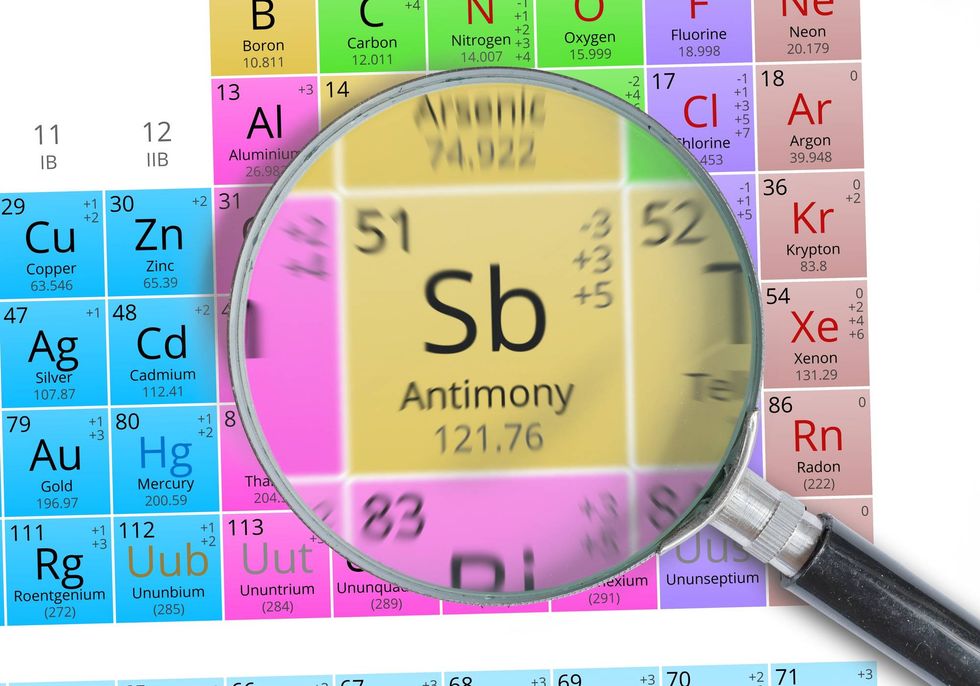
Global antimony production in 2025 was recorded at an average of 110,000 metric tons, with China accounting for 40,000 metric tons, or roughly 36.37 percent. For years, these figures have been treated as routine, reflecting China’s entrenched dominance in the sector.
On November 27, 2026, China’s suspension of its antimony export ban to the US is set to expire, placing supply security back in focus. America’s import-dependent antimony supply must now turn to new sources, creating investment opportunities in domestic projects poised to fill the gap.
Interest in antimony climbed in 2025 following discussions on geopolitical and supply chain strategies, underlining the silvery-gray metalloid’s role in energy transition and defense.
What is antimony used for?
Once overlooked, antimony is now classified as a critical mineral in several countries, including the US. The US Geological Survey highlights antimony’s role in lead-acid batteries and flame retardants in its critical minerals list.
Fastmarkets said that flame retardants account for roughly 50 percent of global antimony use, adding that demand from plastics, textiles and construction materials is expected to remain stable.
It also points to the rapid growth of the photovoltaic industry as a key long-term demand driver, with antimony mainly used in solar cover glass to boost light transmission.
In the defense sector, military applications of antimony include the strengthening of bullets and armor-piercing rounds. This scientifically happens by mixing with lead as a hardening agent, reducing deformation compared to pure lead. Studies suggest that in the US, the hardening agent typically contains 1 to 3 percent antimony by weight.
Antimony is also found in explosives, night vision goggles, nuclear weapons and flame-retardant military uniforms. Its compounds allow for the conversion of photons (light particles) into electrons, making it usable for other optical technologies like infrared sensors and laser sighting.
Antimony shortage and supply
China, along with Russia and Tajikistan, controls about 90 percent of global antimony production. In 2025, Russia and Tajikistan followed China’s lead, accounting for 32,000 metric tons and 22,000 metric tons, respectively.
Data from the US Geological Survey shows that global mine output fell from 153,000 metric tons in 2020 to 110,000 metric tons in 2025, with overall antimony production expected to increase by approximately 6 percent through 2030. Recycling also supplied only around 12 percent of estimated US consumption in 2025, with the remainder coming from imports. This scenario leaves the country highly vulnerable to geopolitical shocks such as China’s export restrictions.
Antimony price
Prices of antimony have already doubled since the restrictions…
Read More: Antimony Stocks: Why the US Supply Gap Matters to Investors