
Nickel Price Trends: Q3 2026 Review and Forecast
Nickel slid to fresh 2026 lows in Q3 as doubts grew over how long Indonesia will keep a tight lid on supply.
The metal price rebounded in July from June lows, but quickly gave back those gains as the Indonesian government’s mid-year quota review, elevated exchange inventories and weaker battery demand added downward pressure.
After cutting 2026 mining quotas to support nickel prices, Jakarta spent the third quarter fielding requests from miners to revise them, and the market is still working out how much supply will return. At the same time, a revised ore benchmark eased costs for battery materials producers, but did little to boost demand.
Stainless steel consumption has held up, while nickel’s role in electric vehicle (EV) batteries keeps losing ground to lithium-iron-phosphate (LFP) chemistry. With investors now looking toward Indonesia’s 2027 quota applications and export control changes, the final quarter of the year could bring more volatility.
Read on to learn what experts see coming for the nickel market as the second half of the year begins.
What happened to the nickel price in Q3?
The three month nickel contract on the London Metal Exchange (LME) entered the quarter at US$16,365 per metric ton (MT) on July 1. Prices recovered through the month, climbing to around US$17,410 by July 23.
Nickel held near US$17,000 through early August before dipping to about US$16,770 on August 6. Nickel was largely rangebound for the rest of the month, remaining between US$16,800 and US$17,100.
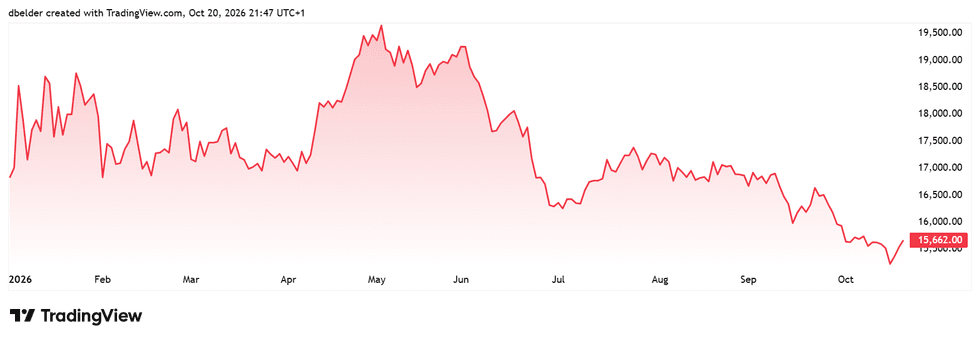
Nickel price, January 1 to October 20, 2026.
Chart via TradingView.
September brought a significant shift, with the contract price starting around US$16,800 before falling to US$16,160 on September 15. Nickel prices modestly rebounded in the middle of the month, climbing to US$16,595 on September 23 before falling to US$16,050 on September 30.
Prices continued down at the start of Q4, hitting a year-to-date low of US$15,100 on October 15.
Indonesian policy shifts keep pressure on prices
Indonesia set its 2026 Work Plan and Budget (RKAB) at 260 million to 270 million MT of nickel ore in February, well below smelters’ estimated needs of 300 million to 310 million MT, according to a report from S&P Global Energy. The move effectively created a shortage among the country’s downstream upgraders.
There were concerns that a mid-year policy shift could have meant more metal production, risking further downward price pressure. Miners were able to submit revised quotas until July 31, but according to Benchmark Mineral Intelligence, the Indonesian government declined to raise RKAB to the higher range some were asking for.
In August, however, the ministry began approving revised plans for dozens of companies without disclosing volumes, after signaling that additions would be selective and aimed at smelters facing ore shortages.
As of mid-September, Indonesia’s Ministry of Energy and Mineral…