
How a small handful of exchange-traded funds can build a sensible portfolio
Morningstar CEO Kunal Kapoor shares ETFs worthy of long-term investment on ‘The Claman Countdown.’
Most people who delay investing aren’t doing so because they think putting their money into the markets is a bad idea. They’re stuck in front of a confusing smorgasbord of options, afraid to pile the wrong things on their plate and at least a little afraid of looking like they don’t know what they’re doing (especially if it’s true). Thus, analysis paralysis is often the default.
Have no fear. There’s a quick and simple way to build a sensible portfolio by using a small handful of exchange-traded funds (ETFs). So, without further ado, let’s get some clarity over what’s going to go into this portfolio and how much of an allocation each ETF should get.
Here’s the easy ETF portfolio you’ve been looking for
For a portfolio to count as being both good and easy, it needs to be anchored with a hearty helping of market-tracking index funds. That way, you’ll get exposure to growth and quite a lot of diversification, which will help to insulate you from all sorts of risks.
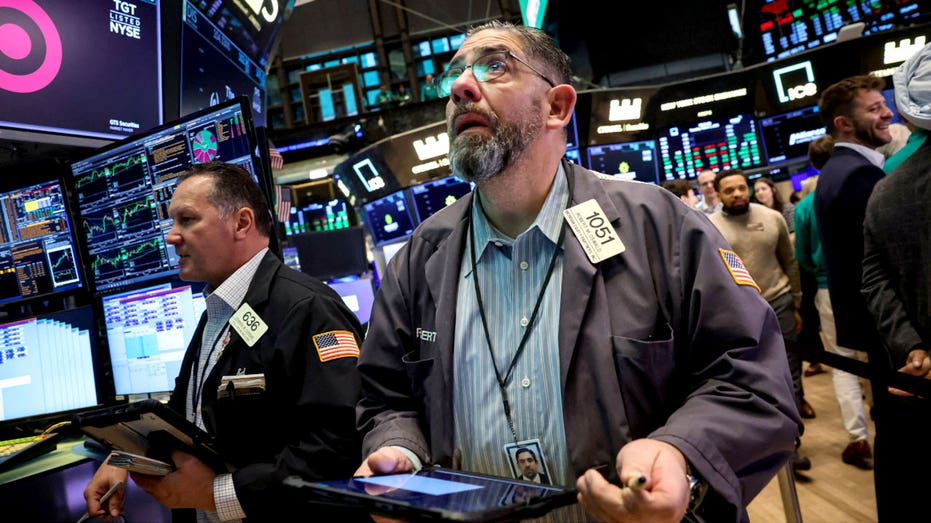
Traders work on the floor at the New York Stock Exchange in New York City March 3, 2026. (Brendan McDermid/Reuters)
COULD S&P 500 ETFS ALONE FUND YOUR ENTIRE RETIREMENT?
Therefore, 65% of the portfolio could be allocated to the Vanguard S&P 500 ETF, and 20% could be allocated to the iShares Core MSCI Total International Stock ETF.
| Ticker | Security | Last | Change | Change % |
|---|---|---|---|---|
| VOO | VANGUARD S&P 500 ETF – USD DIS | 647.25 | -4.29 | -0.66% |
| IXUS | ISHARES TRUST CORE MSCI TOTAL INTL STK | 91.98 | -1.89 | -2.01% |
The Vanguard ETF has an expense ratio of just 0.03% annually and tracks the performance of the biggest public companies listed in the U.S., whereas the iShares ETF has an annual expense ratio of 0.07% and tracks the performance of the biggest international companies, explicitly not including those in the U.S.
The point of having both of these in the portfolio is that you’ll be diversified across business sectors and across geographies, which reduces the chance that problems in the U.S. or any other specific country will drag down your portfolio’s performance as a whole.
Those two ETFs focus on stocks. A well-rounded and sufficiently diversified portfolio also needs some exposure to bonds to ensure that it has a fairly safe source of yield when times get tough, and to cryptocurrency, as it isn’t represented well in any of the other ETFs.
GOLDMAN SACHS COMPLETES INNOVATOR CAPITAL ACQUISITION, LIFTING ETF ASSETS TO $90B
Thus, you could also allocate 10% of the portfolio to the Vanguard Total Bond Market ETF and 5% to the iShares Bitcoin Trust ETF.
In a nutshell, BND is crash insurance. It holds more than 17,000 U.S. investment-grade bonds for an annual expense ratio of just 0.03%. Its trailing-12-month yield is only 3.9%, but it isn’t intended to be a major growth driver for your portfolio anyway.
| Ticker | Security | Last | Change | Change % |
|---|---|---|---|---|
| BND | VANGUARD TOTAL BOND MARKET ETF – USD |
Read More: How a small handful of exchange-traded funds can build a sensible portfolio