
America’s Antimony Problem and Why Investors Should Care
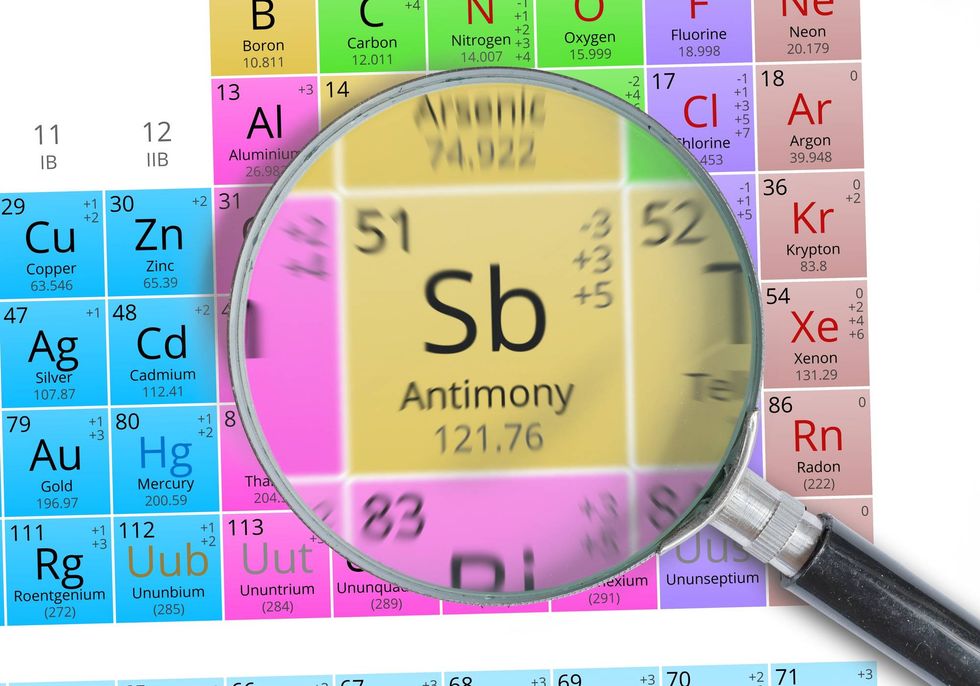
Global antimony production in 2025 was recorded at an average of 110,000 metric tons, with China accounting for 40,000 metric tons, or roughly 36.37 percent. For years, figures like these have been treated as routine, reflecting China’s entrenched dominance in the sector. But with the suspension of China’s ban on resource exports to the US set to end in November 2026, America’s import-dependent antimony supply faces a looming crisis. However, this also creates investment opportunities in domestic projects poised to fill the gap.
Interest in antimony climbed in 2025 following discussions on geopolitical and supply chain strategies, underlining the silvery-gray metalloid’s role in energy transition and defense.
Why antimony matters
Once overlooked, antimony is now classified as a critical mineral in several countries, including the US.
The US Geological Survey highlights antimony’s role in lead-acid batteries and flame retardants in its Critical Minerals List. As Fastmarkets notes, such applications continue to anchor antimony consumption, underscoring the mineral’s enduring importance beyond emerging technologies.
In the defense sector, military applications of antimony include the strengthening of bullets and armor-piercing rounds. This scientifically happens by mixing with lead as a hardening agent, reducing deformation compared to pure lead. Studies suggest that in the US, the hardening agent typically contains 1 to 3 percent antimony by weight.
Antimony is also found in explosives, night vision goggles, nuclear weapons and flame-retardant military uniforms. Its compounds allow for the conversion of photons (light particles) into electrons, making it usable for other optical technologies like infrared sensors and laser sighting.
“The rapid expansion of the photovoltaic industry has emerged as a key long-term demand driver,” Fastmarkets said. It adds that flame retardants account for roughly half of global end use and that demand from plastics, textiles and construction materials is expected to remain stable, supported by fire safety regulations.
China’s current dominance and export controls
China, along with Russia and Tajikistan, controls about 90 percent of global antimony production. In 2025, Russia and Tajikistan followed China’s lead, accounting for 32,000 metric tons and 22,000 metric tons, respectively. The US imports over 80 percent of its antimony, leaving it highly vulnerable to geopolitical shocks such as China’s export restrictions.
Prices of antimony have already doubled since the restrictions announcement in 2024, reaching a historical high of US$59,750 per metric ton in July 2025, then declining months later, around September.
Commodity price group Sunsirs said in a report that the supply/demand gap for antimony also peaked in 2025 at 34,000 to 39,000 metric tons, its highest in five…
Read More: America’s Antimony Problem and Why Investors Should Care