
Rare Earths Recycling Offers Path to Secure, Sustainable Supply Chain
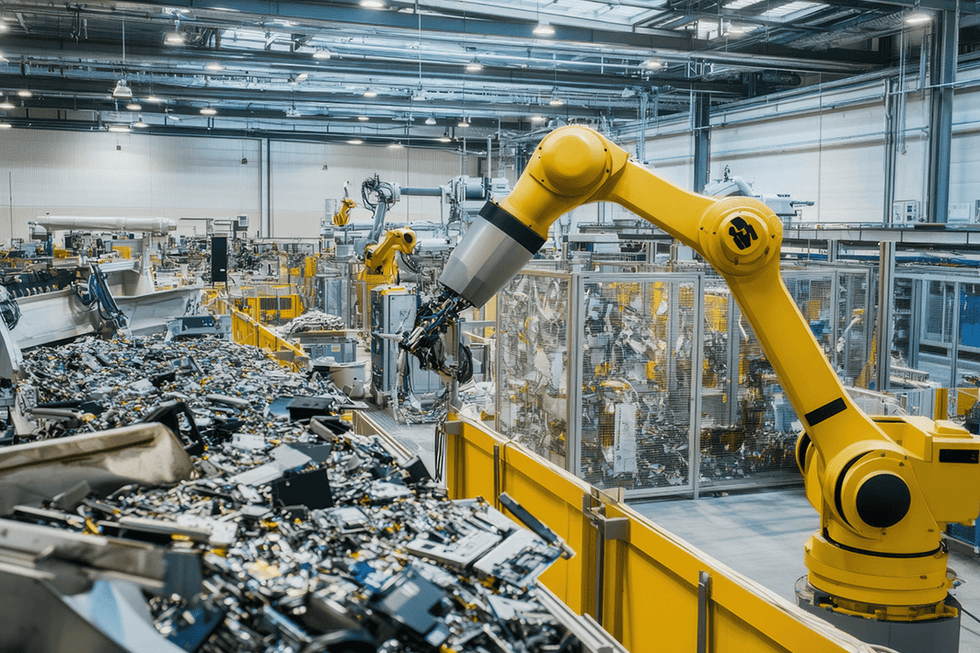
Recycling materials has been a widely established process to promote sustainability and reduce carbon footprint. Now, thanks to both technology innovation and an increasing global sentiment toward resource resilience and security, this well-known process is carving a niche in the critical minerals space.
The global shift toward clean energy and advanced technologies is driving unprecedented demand for rare earth elements (REEs), yet the US remains almost entirely dependent on foreign sources, particularly China, for its supply. As the risks of this reliance grow more apparent, both industry and government are turning to recycling as a scalable, lower-impact solution to secure domestic access to these strategic materials.
Supply challenges
The rare earth supply chain is one of the most geopolitically concentrated in the world.
As of 2023, China accounted for nearly 90 percent of the global refined output of rare earth elements and dominates downstream magnet manufacturing capacity. This dominance poses significant supply chain and national security risks. According to the US Department of Energy, a disruption in REE supply would have a disproportionate impact on high-tech and defense sectors that rely on materials like neodymium and dysprosium.
Rare earth magnets, particularly neodymium-iron-boron (NdFeB) types, are central to an increasingly wide array of technologies. In addition to their well-known applications in electric vehicles, wind turbines and military systems, they are also vital to the high-performance motors and cooling systems used in artificial intelligence (AI) infrastructure.
As demand for AI models and cloud computing surges, so does the need for hard disk drives as well as more efficient data centers, which rely on REE-powered components for energy efficiency and reliability.
Consumer electronics, robotics, medical imaging devices and industrial automation systems also depend on these magnets to operate at high precision and speed. This broad dependency underscores why rare earths are not only an industrial necessity but also a strategic economic asset.
Recognizing the REE supply imbalance, the US government has prioritized rare earths as part of its critical minerals strategy, with policy initiatives aimed at supporting domestic production, recycling and innovation.
Beyond mining: Resilience through recycling
While new rare earth mining projects are in development across North America, they face well-known challenges: long permitting timelines, high capital costs and environmental concerns.
A report from the Harvard International Review indicates traditional mining of REEs often produces up to 2,000 tons of toxic waste per ton of extracted material. Recycling mitigates these impacts by reducing the need for new mining operations, thereby preserving ecosystems and decreasing carbon emissions. Innovative…
Read More: Rare Earths Recycling Offers Path to Secure, Sustainable Supply Chain