
Anxiety turns to hope as Wall Street stocks climb back to records
UBS managing director and senior portfolio manager Jason Katz joins ‘Varney & Co.’ to break down the surge in market volatility, the rising appeal of health care stocks and what investors should expect from Jerome Powell’s next rate move.
Anxiety has given way to hope on Wall Street.
Stocks are back near records, recovering from a slump spurred by fears that the excitement about the artificial-intelligence boom has outstripped the potential profits.
Optimism about AI has proved durable. But other important factors are also powering gains. Here’s a look at some of the reasons investors expect that the rally could go further from here:
Stock valuations could be worse
| Ticker | Security | Last | Change | Change % |
|---|---|---|---|---|
| SPY | SPDR S&P 500 ETF TRUST – USD DIS | 685.69 | +1.30 | +0.19% |
| VOO | VANGUARD S&P 500 ETF – USD DIS | 628.61 | -1.87 | -0.30% |
| QQQ | INVESCO QQQ TRUST – USD DIS | 624.28 | -1.20 | -0.19% |
Stocks currently look very expensive by some measures, such as traditional price-to-earnings ratios. Still, even those ratios remain below their peaks reached in the 1990s dot-com boom. And stock valuations look less stretched in other ways.
INVESTORS BET BIG ON BOOMING DRONE ECONOMY
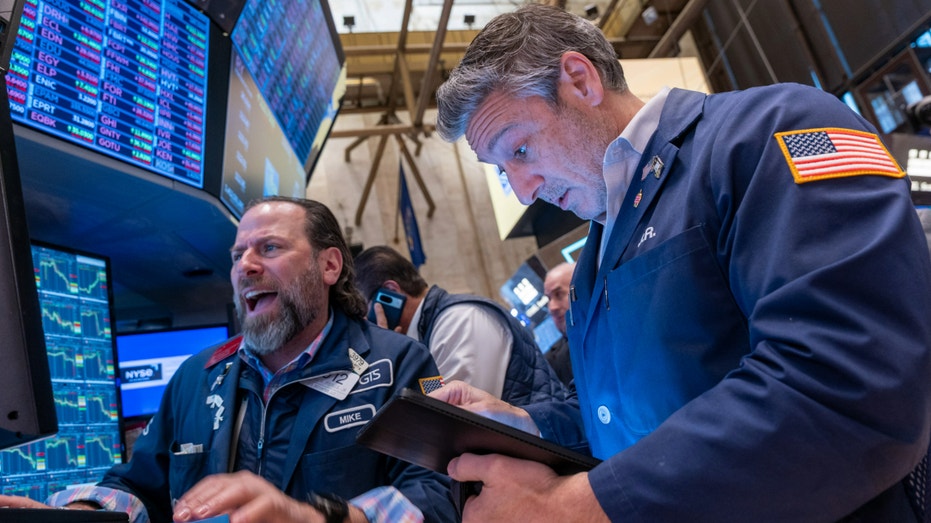
Traders work on the floor of the New York Stock Exchange (NYSE) on April 4, 2025 in New York City. (Spencer Platt/Getty Images)
Many Wall Street analysts think the best way to value stocks is to compare their earnings yield — or earnings-to-price ratio, expressed as a percentage — with yields on ultrasafe government bonds. The additional yield shows how much investors are being compensated to hold the much riskier instrument.
One popular version of this metric, known as the “excess CAPE yield,” uses S&P 500 companies’ average earnings from the past 10 years and adjusts both those earnings and the 10-year Treasury yield for inflation.
As of November, it stood at 1.7%. That is low by historical standards — suggesting the high prices of stocks have shrunk the reward for owning them over bonds. But it is hardly unprecedented and actually up from 1.2% in January, thanks to a decline in the 10-year Treasury yield driven by a cooling labor market and the resumption of Federal Reserve interest-rate cuts.
| Ticker | Security | Last | Change | Change % |
|---|---|---|---|---|
| IEF | ISHARES 7-10 YEAR TREASURY BOND ETF – USD | 96.27 | -0.20 | -0.21% |
| SPTL | STATE STREET® SPDR® PORTFOLIO LONG TERM TREASURY ETF – USD DIS | 26.58 | -0.08 | -0.30% |
Economic growth is supporting earnings
Ultimately, stocks are closely linked to the near-term outlook for consumer spending.
Right now, there are some concerns about the economy. Job growth has slowed significantly, and the unemployment rate has ticked higher — enough to push the Fed to cut rates.

Attendees at the Albany Job Fair in Latham, New York, on Wednesday, Oct. 2, 2024. (Angus Mordant/Bloomberg)
But investors and economists still aren’t that worried. Many believe that job growth has slowed largely because of sharply…
Read More: Anxiety turns to hope as Wall Street stocks climb back to records