
From Obscure Metal to Strategic Asset: Why Antimony is Gaining Investor
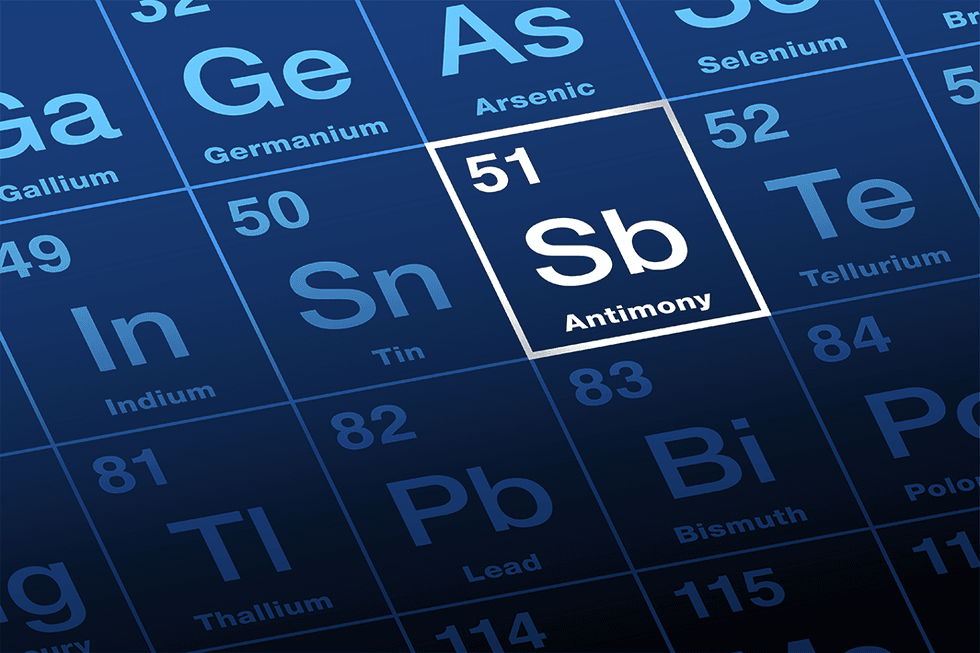
As global powers race to secure the raw materials needed to fuel their energy transition goals, strengthen national defense, and maintain technological leadership, a once-overlooked element is stepping into the spotlight as the next strategic opportunity: Antimony.
Antimony has a long-established traditional role in flame retardants and semiconductors, but this critical mineral is now at the center of geopolitical and supply chain security strategies. With China controlling the majority of global supply and western governments scrambling to build domestic capacity, investors are starting to pay closer attention.
Case for securing supply chains
Antimony is a silvery, brittle metalloid with a surprisingly wide range of uses. It’s best known for its role in flame retardants, which account for more than 80 percent of US consumption, but it’s also a key ingredient in semiconductors, lead-acid batteries, and several defense applications including night-vision goggles and armor-piercing ammunition.
The metal’s heat-resistant properties make it indispensable in products that need to withstand high temperatures, from electronic components to military equipment. Recognizing this importance — and the risks associated with concentrated supply chains — the US Department of the Interior has designated antimony a critical mineral, meaning it’s essential to economic and national security and has a high risk of supply disruption.
Like many critical minerals, global antimony supply is heavily concentrated in China, which accounted for roughly 48 percent of global mine production in 2022, and around 63 percent of US antimony imports.
This dominance has increasingly come under scrutiny and highlighted a global supply vulnerability. In late 2024, Beijing introduced tighter export controls on antimony, citing national security concerns, subsequently raising alarms in Washington. The US imports more than 80 percent of its antimony, and China is its largest supplier.
Outside China, global production is limited, with smaller contributions from countries such as Tajikistan, Russia and Australia. That concentration has left western economies vulnerable to supply disruptions and has prompted new initiatives to develop domestic or allied sources of critical minerals.
Investment landscape
As governments push to secure critical mineral supply chains, and investors are increasingly looking beyond headline commodities like lithium and rare earths, antimony is emerging as a niche but strategic investment theme.
Antimony prices have climbed steadily on the back of tightening supply.
By mid-2025, US prices were averaging around US$55,000 to US$60,000 per metric ton, while Chinese prices hovered near US$40,000 per metric ton, supported by export restrictions and limited new supply. Analysts expect prices to remain firm through the late 2020s…
Read More: From Obscure Metal to Strategic Asset: Why Antimony is Gaining Investor