
Bonds surge in 2025, on pace for best year since 2020 bond rally
Investors are plowing money into a broad swath of assets putting the ETF industry in the driver’s seat of what may be another record year.
Almost everything has lined up for bonds lately.
The Federal Reserve has been cutting interest rates. Jobs growth and consumer spending are slowing, keeping hopes for further cuts alive, but not pointing to an imminent recession that would threaten corporate balance sheets. Inflation pressure has continued to moderate, despite fears that President Trump’s tariffs will drive prices higher.
The widely tracked Bloomberg U.S. Aggregate Bond Index has returned around 6.7% in 2025, accounting for price changes and interest payments. That puts it on pace for the best year since 2020.
Bonds had regained ground after the Fed’s inflation-fighting campaign fueled a historically bad 2022. The Bloomberg Agg—made up largely of Treasurys, investment-grade corporate bonds and agency mortgage-backed securities—returned 5.5% in 2023, though it almost stalled in 2024.
| Ticker | Security | Last | Change | Change % |
|---|---|---|---|---|
| BND | VANGUARD TOTAL BOND MARKET ETF – USD | 74.20 | +0.04 | +0.05% |
| AGG | ISHARES CORE U.S. AGGREGATE BOND ETF – USD DIS | 100.02 | +0.02 | +0.02% |
| BNDX | VANGUARD TOTAL INTERNATIONAL BOND INDEX FUND ETF – USD DIS | 49.50 | +0.04 | +0.08% |
| SGOV | ISHARES TRUST ISHARES 0-3 MONTH TREASURY | 100.55 | +0.01 | +0.01% |
Investors said 2025 feels different. The climb has rewarded investors still stinging from the unusual volatility that followed the Covid-19-era inflation surge. Unlike in the previous few years, the index’s returns have easily outpaced those of short-term T-bills—the other main choice for investors seeking a safe alternative to stocks.
“It’s certainly been more fun to go to client meetings this year as a bond manager,” said Cal Spranger, a fixed-income manager at Badgley Phelps Wealth Managers. “A few years ago, I wasn’t getting invited to any.”
While yields on government and corporate bonds have gradually come down, they are still far above the paltry levels seen during much of the past decade—and investors want to lock them in while they can.
U.S. DEBT CHECKER: HERE’S WHAT YOU OWE
At times earlier this year, brief but sharp selloffs in U.S. Treasurys sparked alarm that the bond market might finally be buckling under the pressure of outsize U.S. borrowing. The size of the budget deficit can influence yields because a larger deficit means the government needs to borrow more by issuing Treasurys, and, in turn, attract demand for that debt with higher rates.
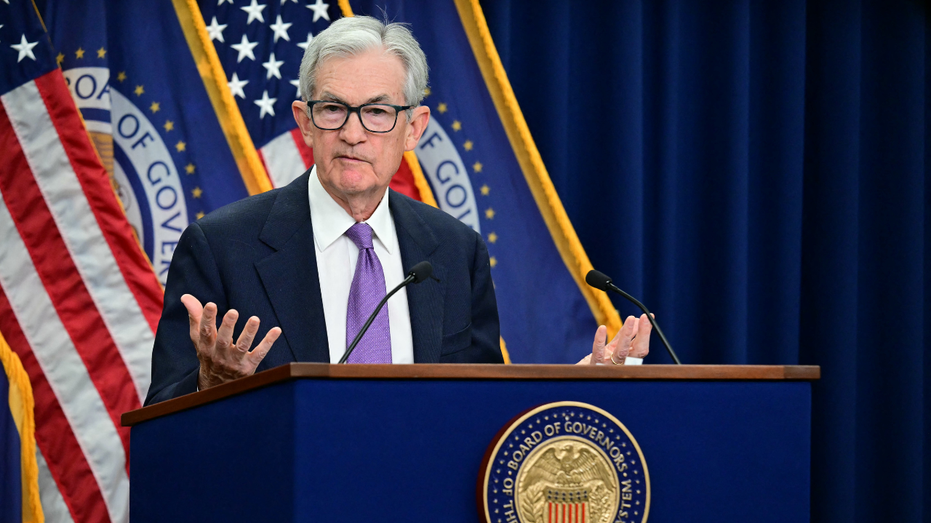
U.S. Federal Reserve Chair Jerome Powell speaks during a press conference at the end of a Monetary Policy Committee meeting in Washington on October 29, 2025. (Jim Watson/AFP/Getty Images / Getty Images)
Falling rates have largely overwhelmed all of those concerns because bonds issued when rates are high become more valuable when they are expected to decrease. At the start of the year, investors were…
Read More: Bonds surge in 2025, on pace for best year since 2020 bond rally