
Why your booze-free drink costs just as much as the alcoholic kind
Cost of Living6:06Why do non-alcoholic drinks cost nearly as much as the real thing?
On a Friday night in Ottawa’s Hintonburg neighbourhood, Sophia Marco scans the drink menu at her local bar.
Around her, friends laugh over cocktails and beer, but she’s eyeing the mocktail section — where prices hover around $14 or $15 a glass.
Marco stopped drinking alcohol in 2020. She didn’t like how it made her feel but still enjoys a night out and a well-made drink.
Since she switched to non-alcoholic options, what surprises her most is that mocktails “tend to be around the same price as the cocktails.”
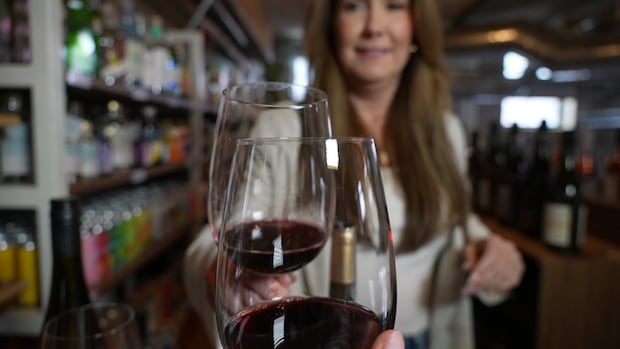
More Canadians have been seeking non-alcoholic beverage options and Toronto businesses have been finding more ways to cater to the growing community in the city. Sarah Kate, founding editor of non-alcoholic lifestyle magazine SomeGoodCleanFun, explains to CBC’s Madi Wong why the demand for non-alcoholic beverage options and events is higher than ever.
Across Canada, the non-alcoholic drink market is booming as more people look for ways to socialize without the buzz. But alcohol-free doesn’t necessarily mean cheaper.
“When I first started to order mocktails or non-alcoholic drinks, I was shocked at first,” says Luba Khalil. “I thought alcohol was the expensive part. But now I’m just kind of like, whatever — everything’s expensive these days.”
All process, no proof
Making non-alcoholic drinks isn’t necessarily simpler or cheaper than producing traditional ones.
Mathieu Gagnon, co-founder of Sober Carpenter, a Montreal-based brewery specializing in non-alcoholic beer, says the process is much more technical than one may think.
“We actually use the same ingredients that go into beer,” he says. “We just stop the fermentation before it reaches above 0.5 per cent.”

The method, called arrested fermentation, cools the beer to near-freezing to stop fermentation — a process Gagnon says requires precision to preserve flavour and aroma. That’s the costly part, not the alcohol, he says.
While Sober Carpenter’s beers are labelled non-alcoholic, they contain less than 0.5 per cent alcohol — a trace amount that meets Canadian labelling standards.
Crafting a good zero-proof or low-proof cocktail or spirit can be even more involved.
Rudy Aldana, co-founder of Parch, a non-alcoholic, agave-based cocktail brand, says removing alcohol means producers have to build flavour complexity from scratch.
“Alcohol is a very cheap ingredient,” he says. “It helps with preservation. It also delivers flavour. So when you remove it, you have to replace it with other ingredients that bring that same level of complexity.”
He says Parch…
Read More: Why your booze-free drink costs just as much as the alcoholic kind