
Amazon shows off new tech at Delivering the Future Summit in California
Amazon’s chief technologist for robotics, Tye Brady, and Amazon’s vice president of transportation, Beryl Tomay, discuss the new technology the e-commerce giant is using.
MILPITAS, Calif. – Amazon’s Delivering the Future Summit kicked off this week to showcase the future of the e-commerce giant’s delivery wing. But amid its push to become more efficient, concerns have emerged that it may come at a steep cost – jobs.
The New York Times recently reported, citing interviews and internal strategy documents, that Amazon’s automation push could allow the company to avoid hiring 160,000 fewer people by 2027 and more than 600,000 fewer people by 2033.
But Tye Brady, Amazon’s chief technologist for robotics, sees it differently. Brady said the robots he’s developing are meant to help humans, not replace them.
“Our strategy is people and machines working together. The growth that we’ve seen is because of this mindset of machines augmenting and amplifying the human potential,” said Brady. “We build our machines in a way that allows our employees to have the best tool set in the world in order to do their jobs, not only safer, but also with more efficiency.”
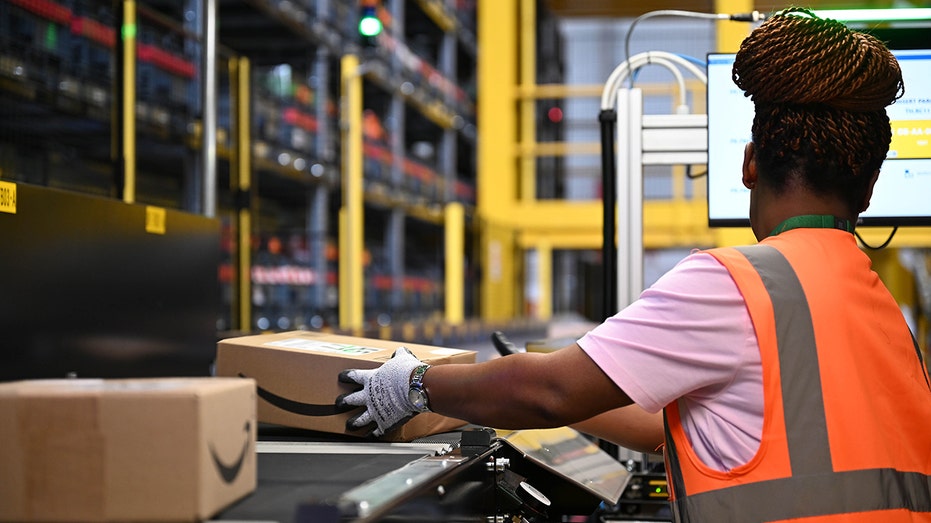
Amazon’s chief technologist for robotics said the robots he’s developing are meant to help humans, not replace them. (Wolf von Dewitz/Picture Alliance / Getty Images)
AMAZON DEFENDS AMBITIOUS AI STRATEGY THAT COULD PREVENT 600,000 FUTURE HIRES THROUGH INNOVATION
Brady said no current employees will be laid off, and the more efficient the robots, the more delivery centers Amazon can put across the country, which would result in more jobs, not fewer.
One of those robots was on display Wednesday at a delivery center in Milpitas, California, about 15 minutes north of San Jose. It’s a project Brady has been working on for years, code-named “Blue Jay.” It’s an AI-powered robotic arm that can pick and sort hundreds of millions of differently shaped items at one station, handling repetitive tasks normally assigned to frontline employees.
The smaller footprint means “creating the efficiencies that we know our customers love by passing along a low cost to our customers and also creating a safer environment for our employees so they don’t have to pick items from the top of our shelves or the bottom of our shelves,” said Brady.
Factory workers aren’t the only employees getting some AI relief. Delivery drivers will soon be wearing smart glasses specially designed to keep their hands free, allowing them to pick up boxes and carry them with both hands, reducing the risk of injury in a fall. It also means no more having to carry a phone to take pictures of the packages at the front door.
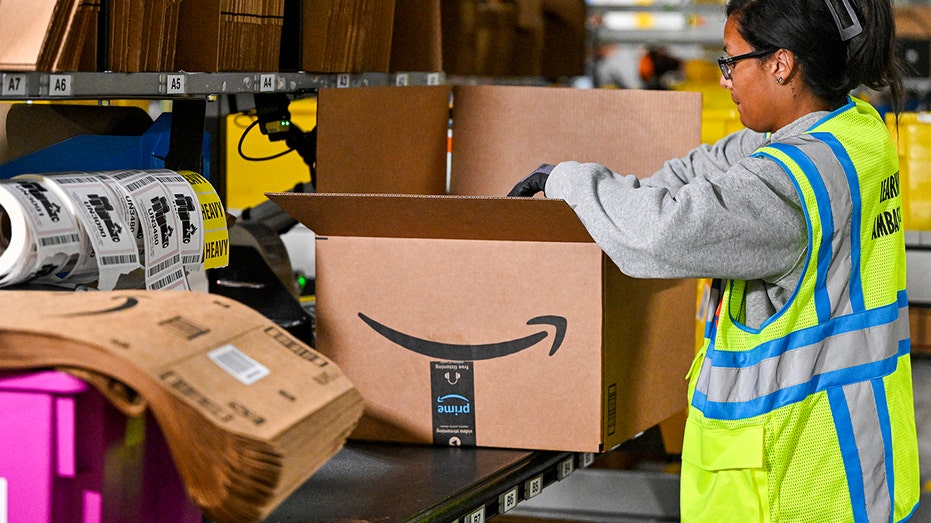
A worker packages products at a fulfillment center in Daytona Beach, Fla. (Miguel J. Rodriguez Carrillo/Bloomberg via Getty Images)
“They don’t need to look at a phone, enter information into a phone,” said Beryl Tomay, vice president of transportation at Amazon. “They can focus on their surroundings…
Read More: Amazon shows off new tech at Delivering the Future Summit in California