
Silica Investing: How Processing Bottlenecks Create Breakthrough
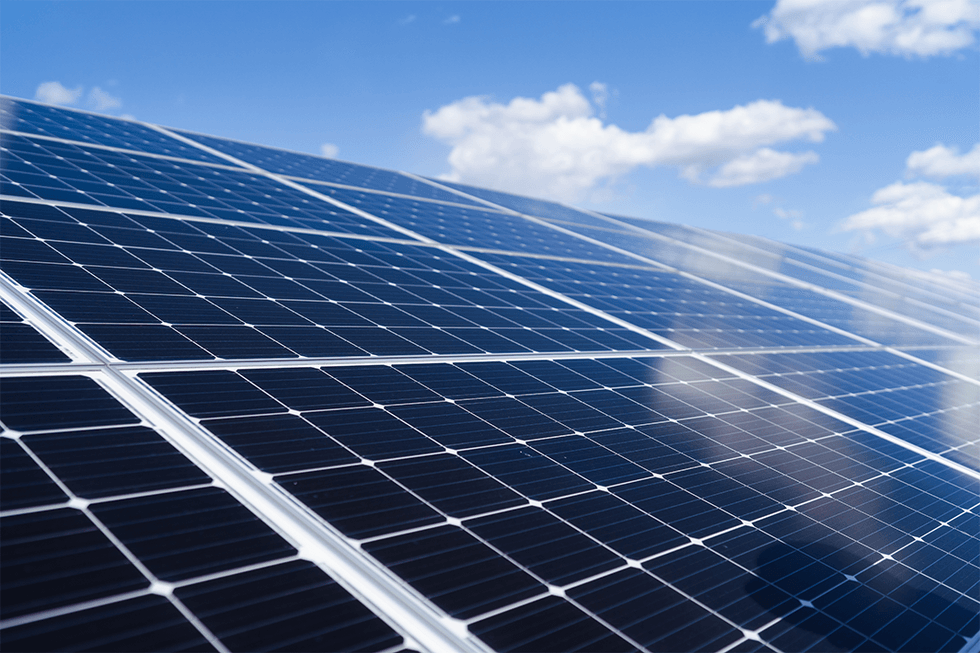
As one of its most abundant minerals, the world has no shortage of silica. The challenge — and more importantly, the value — lies in making it pure enough for the technologies that will define the global energy transition.
Innovations in cleaner and more efficient high-purity (HPQ) silica processing are emerging as one of the most powerful levers of value creation in the energy transition. While quartz is abundant in nature, producing HPQ silica has historically depended on energy-intensive, chemical-heavy methods — until recently.
Breakthroughs in cleaner, more efficient refining are reshaping how HPQ silica is produced, cutting costs, shrinking carbon footprints and creating a technology-driven industry from what was once viewed as a commodity.
HPQ market forecast and drivers
HPQ silica — quartz refined to purities above 99.9 percent — is the indispensable feedstock for solar panels, semiconductors and advanced glass. Every solar panel requires silicon wafers made from HPQ silica. It is also essential for creating semiconductor chips — the backbone of AI, electrification and cloud computing. Ultra-clear solar glass also depends on HPQ silica’s exceptional purity.
Market forecasts highlight this growing importance. A report from Mordor Intelligence estimates the HPQ market at US$703.21 million in 2025, with growth expectations reaching US$876.33 million by 2030, a CAGR of greater than 4.5 percent from 2025 to 2030. That growth is driven not just by renewables — where solar capacity additions are expected to exceed 500 gigawatts annually by 2030 — but also by the relentless expansion of semiconductors and digital infrastructure.
Yet for all this potential, the real challenge isn’t finding quartz — it’s processing it into HPQ silica at scale.
Traditional production and limitations
The processing of HPQ silica has traditionally been costly and environmentally challenging.
Conventional production involves high-temperature thermal refining and acid leaching, which are both energy-intensive and reliant on harsh chemical reagents. These processes create waste streams that are increasingly difficult to justify in a world governed by ESG mandates.
On top of that, logistics remain a drag. In many cases, silica sand must be transported long distances to processing plants, then shipped internationally to reach end markets. This adds to both cost structures and carbon intensity.
For HPQ silica to meet the needs of solar, semiconductors and next-generation batteries, the industry must move beyond these outdated approaches.
Innovations in processing and logistics
That shift is already underway. At UC Davis, researchers recently demonstrated that quartz from Brazil could be purified to +99.99 percent HPQ silica using femtosecond laser technology.
This…
Read More: Silica Investing: How Processing Bottlenecks Create Breakthrough