
Navigating Uncertainty: How Trump’s Tariffs Are Affecting the Gold Market
The gold price has been on the rise in 2025 as a slew of factors work in its favor.
Central bank buying has long been a key point of support, as has escalating conflict in the Middle East and elsewhere. A newer addition is tariff tensions as the Trump administration fleshes out trade policies.
The gold price has benefited from safe-haven demand amid the turmoil, but concerns that the yellow metal itself might face tariffs have also impacted the sector as industry insiders react to uncertainty.
Read on to learn how tariffs have affected the gold market and price so far.
How have tariffs affected the gold price?
The gold price has been on the rise since the beginning of the year. After briefly touching the US$3,500 per ounce level in May, it has pulled back and was trading just under US$3,400 as of Tuesday (August 26).
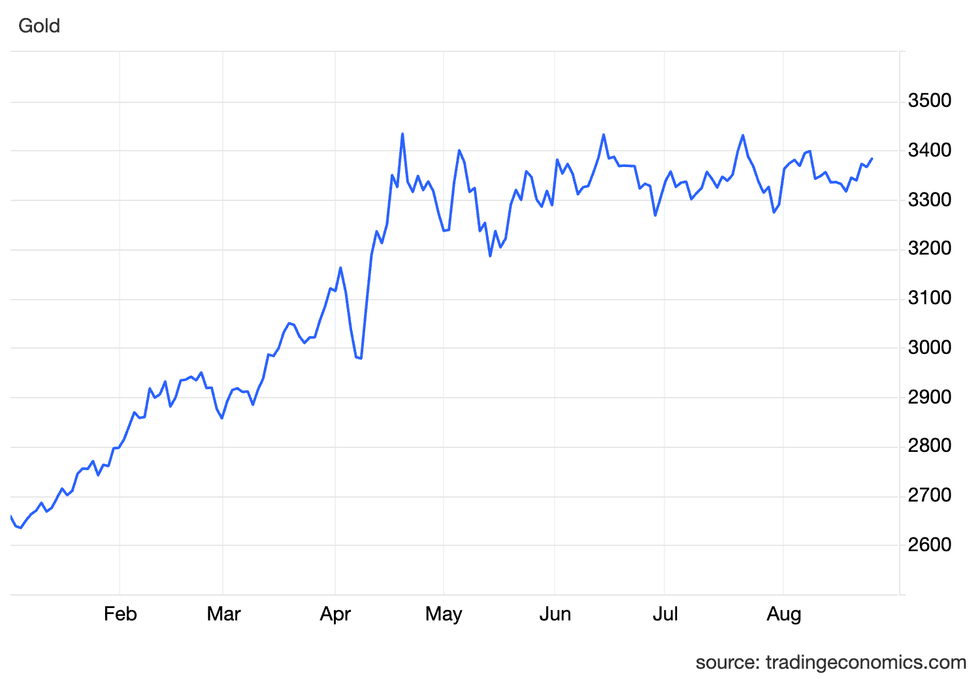
Gold price, January 1 to August 26, 2025.
Chart via TradingEconomics.
Although some of its increase is attributable to the points mentioned above, a significant portion is owed to a lack of information surrounding US President Donald Trump’s tariff policies.
Initially there was no clarity on what or who was being tariffed, or when the levies would ultimately be implemented, and investors started to move into gold for greater stability and portfolio diversification.
Uncertainty about whether gold would be tariffed also had an effect, prompting traders in the US to import physical gold; this created a price differential between New York futures and the London spot price.
Concerns dissipated as the Trump administration began to nail down tariffs, but were reignited once again when US Customs and Border Patrol posted a ruling on July 31 indicating that the 39 percent tariffs against imports from Switzerland would include 1 kilogram and 100 ounce gold bars.
The news caused spot gold to spike more than 3 percent, from US$3,290 to US$3,398, and sent December futures to an all-time high of US$3,549. Meanwhile, traders halted imports of Swiss bars.
After several days of turmoil, Trump said the ruling was incorrect, and the bars would not be included in the tariff measures being applied to other Swiss imports; the gold price then retreated.
How would gold tariffs have impacted the market?
Gold functions as both a commodity and an essential part of the world’s financial system.
One kilogram and 100 ounce gold bars are used to back futures trading, and regular shipments of the metal are needed to settle contracts once they come due. A 39 percent tariff on gold from Switzerland would have been particularly disruptive, as Swiss refineries account for approximately 70 percent of the world’s gold.
According to the UN Comtrade database, in 2024, Switzerland exported more than 1,400 metric tons of unwrought gold worth more than US$106 billion, representing nearly 30 percent of the country’s total exports. Tariffs…
Read More: Navigating Uncertainty: How Trump’s Tariffs Are Affecting the Gold Market